Coins & Banknotes
Preview Lots: 18
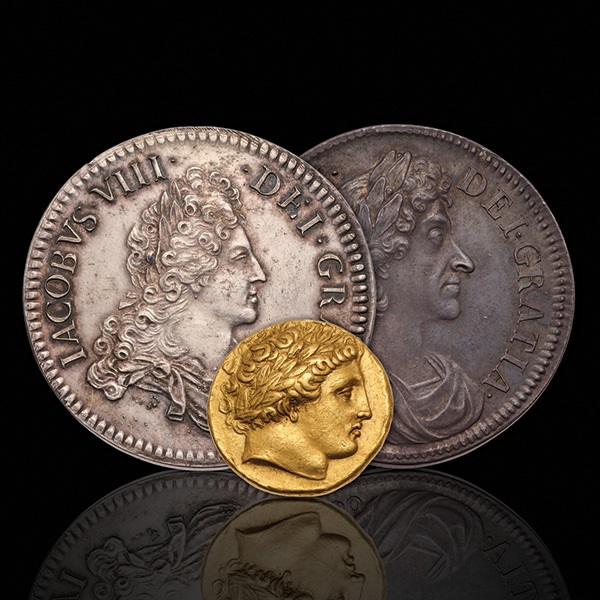
The August Coins and Banknotes sale features an interesting variety of ancient coins, including specimens from Ancient Greece, Carthage, Judaea, Celtic Britain, and Rome. One of the highlights of the auction is a stunning gold stater from Philip II of Macedon, dating back to the fourth century BC. This coin exemplifies the remarkable detail of Hellenistic coin design from that period.
A rare Henry I penny leads the British hammered section of the sale. This coin was discovered by a metal detectorist in East Yorkshire (PAS reference: YORYM-68B2AA) and is a PAXS type penny from the York Mint. It represents the first known coin of the York moneyer Edwine in this type and is believed to date from the early 12th century. The hammered section also includes coins from the reigns of Stephen, Henry II, William the Lion of Scotland, and features an Edward III half noble.
In the milled section, a pair of Scottish pattern crowns stands out. Both were struck in 1828 by Matthew Young from dies originally prepared by Norbert Rottiers for use during the reigns of James VII (II of England) and the uncrowned James VIII, commonly known as the Old Pretender. These coins are extremely rare, with only about 60 examples of each type believed to have been struck.
The Banknote section includes a rare Hudson’s Bay Company promissory note. These notes are rarely offered for sale in the UK, yet this is the third time Tennants has presented specimens from this series in the last three years. This particular note is the first type printed but was never issued; it comes complete with its counterfoil and is in excellent condition. Additionally, there will be a Pennsylvania threepence from 1764, printed by Benjamin Franklin, which is a rarely seen plate A variety.